Challenge Name:
Det store nissehack: Kodedepotets Hemmeligheder
Category:
Det store nissehack
Challenge Description:
Du har nu fundet gerningsgnomens hjemmeside, men dens indhold er kun overfladen. Julens politi mistænker, at yderligere information om eksfiltreret data kan gemme sig bag skjulte sider.
Brug OSINT-teknikker for at se, om du kan få adgang til disse skjulte sider og afsløre flere detaljer om, hvad der er blevet stjålet.
Kan du grave dybt nok til at finde den skjulte information?
Approach
In our previous task, we found a bogus certificate:
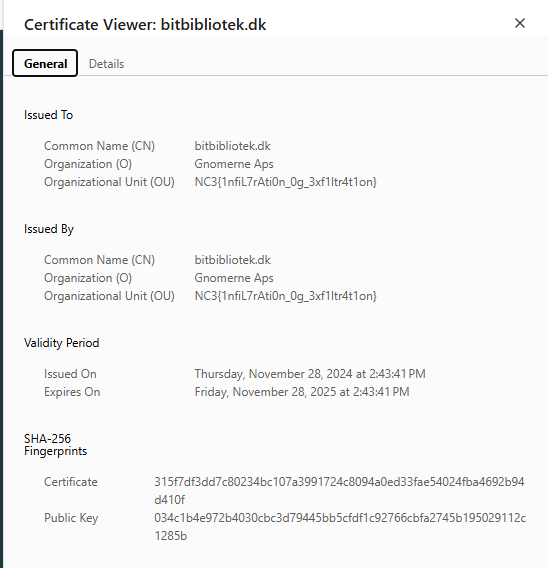
Let’s extract any relevant information:
$ openssl x509 -noout -text -in bitbibliotek.dk.crt
Output:
Certificate:
    Data:
        Version: 3 (0x2)
        Serial Number:
            6c:ca:66:1e:35:25:49:d5:a9:f6:99:3e:5e:dc:0b:fe:22:ee:6d:8c
        Signature Algorithm: sha256WithRSAEncryption
        Issuer: C = DK, ST = REGION SJAELLAND, L = Ringsted, O = Gnomerne Aps, OU = NC3{1nfiL7rAti0n_0g_3xf1ltr4t1on}, CN = bitbibliotek.dk, emailAddress = datagnasker@proton.me
The email address stands out as an interesting lead for an OSINT challenge.
Exploring the website
Before we dig into our Datagnasker, lets check out the site we found.
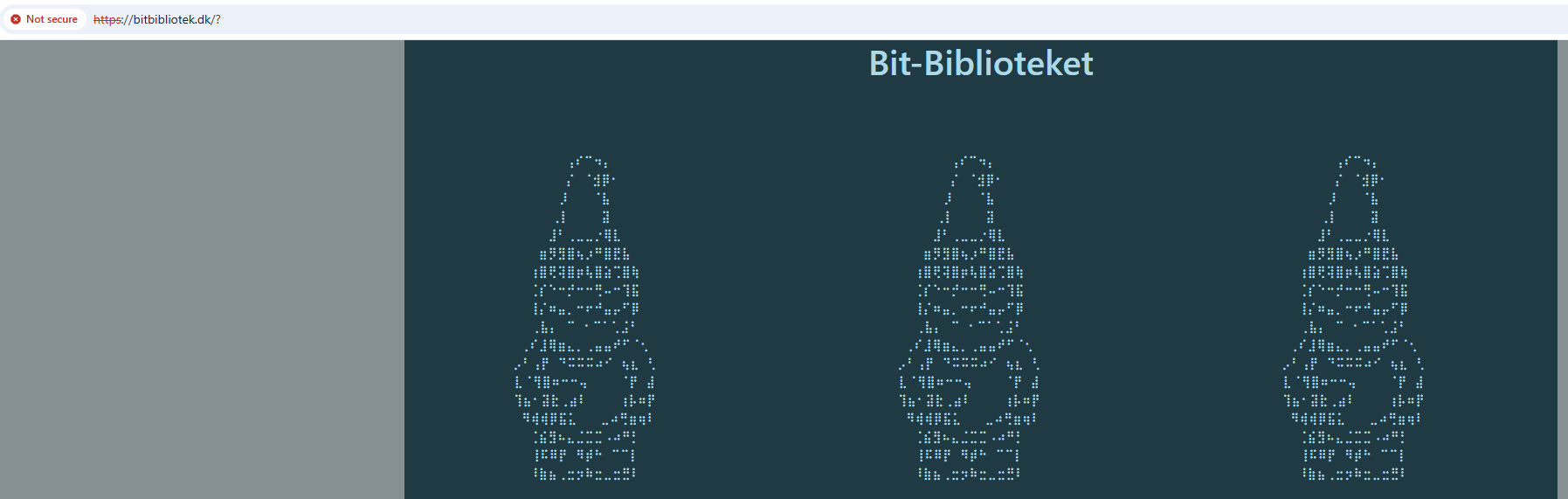
Not much there, except some christmassy ASCII art.
Rather than attempting brute-force methods, I decided to focus on systematic OSINT investigation.
Following the threads
1: Github
A common first step in OSINT challenges is checking GitHub for user profiles, this was mostly done based on intuition from previous CTF’s. Searching for the email alias datagnasker
https://github.com/search?q=datagnasker&type=users
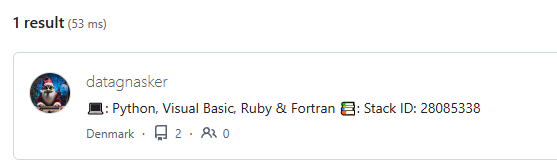
The user image matched our expectation – we’ve found the correct profile!
2: Stack Overflow The GitHub profile lists a Stack ID. This led me to Stack Overflow: https://stackoverflow.com/users/28085338/
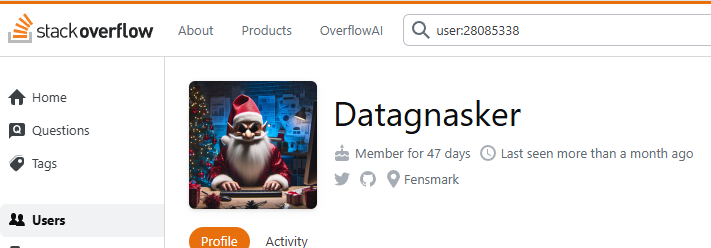
There he is again.
3: Twitter The Stack Overflow profile links back to GitHub and includes a Twitter reference: https://x.com/BMadsen97204
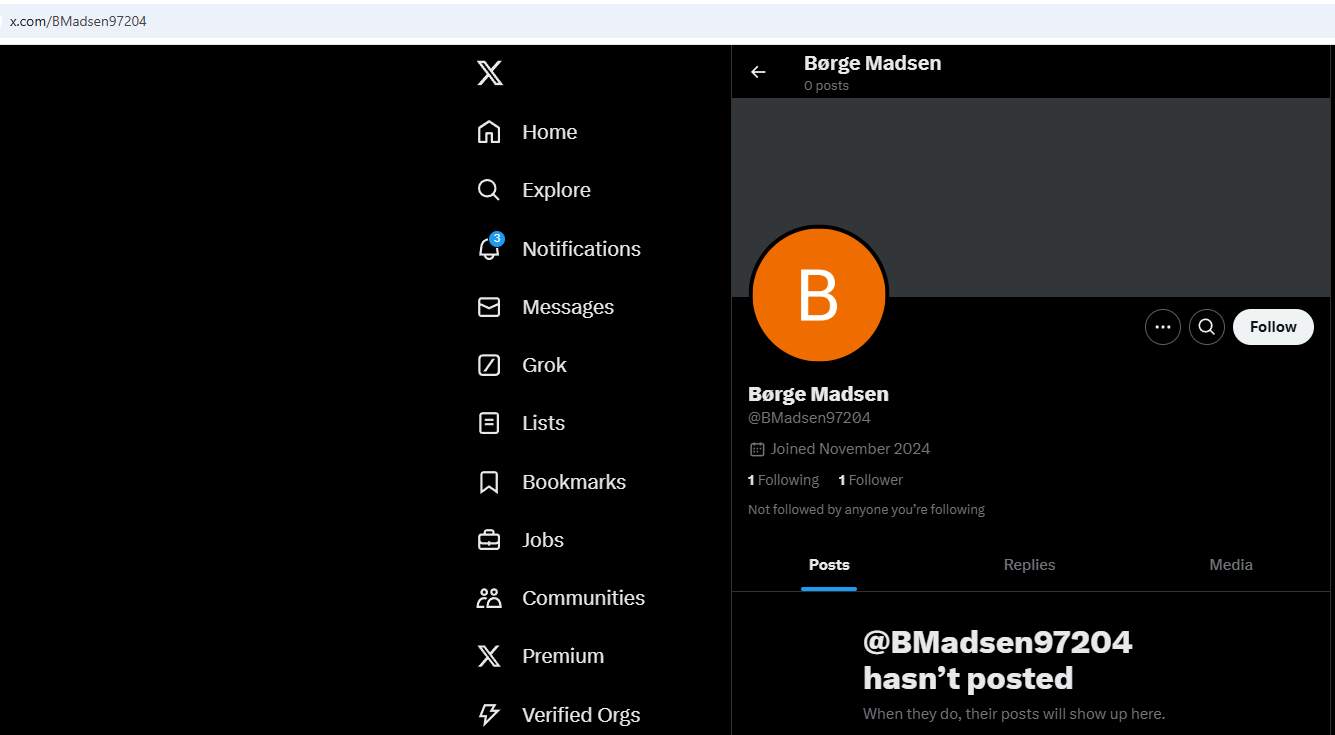
This provided the user’s real name, but the trail seemed to end there. I returned to GitHub to investigate further.
The github repository
The user only has a single repository: web_test
This repository seemed to contain a version of the site hosted at bitbibliotek.dk.
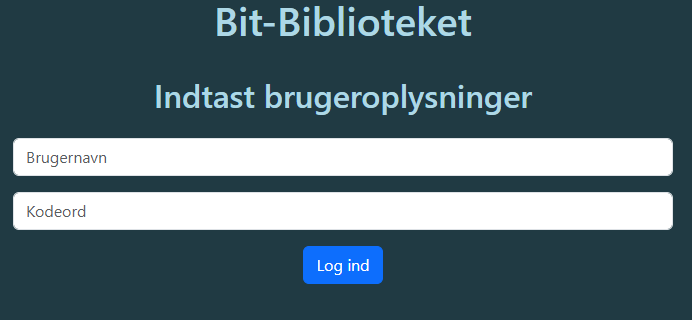
Finding the Login Page Inspecting the views.py file revealed a potential login page - lets try that: https://bitbibliotek.dk/login
Analyzing Commit History
A common technique for CTF challenges involving git repositories is to analyze commit history. The repository had 6 commits: https://github.com/datagnasker/web_test/commits/main/
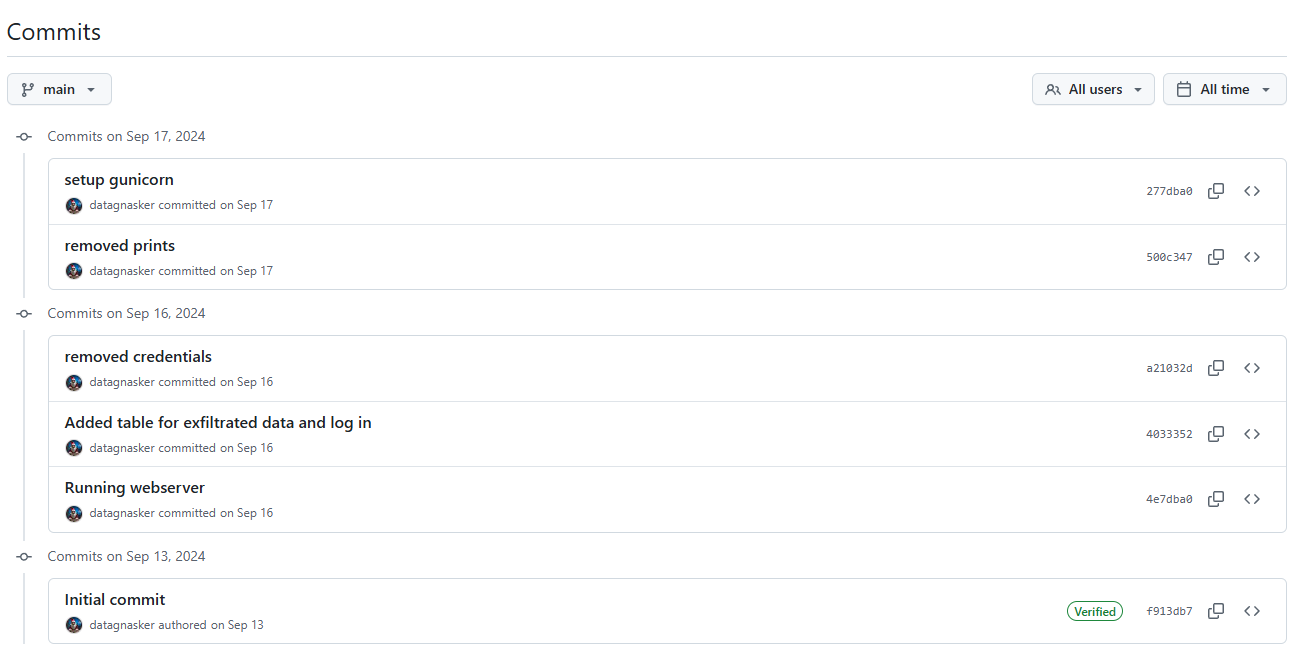
One commit titled “removed credentials” caught my attention: https://github.com/datagnasker/web_test/commit/a21032da512c1a5852dd54297654dca64347d945
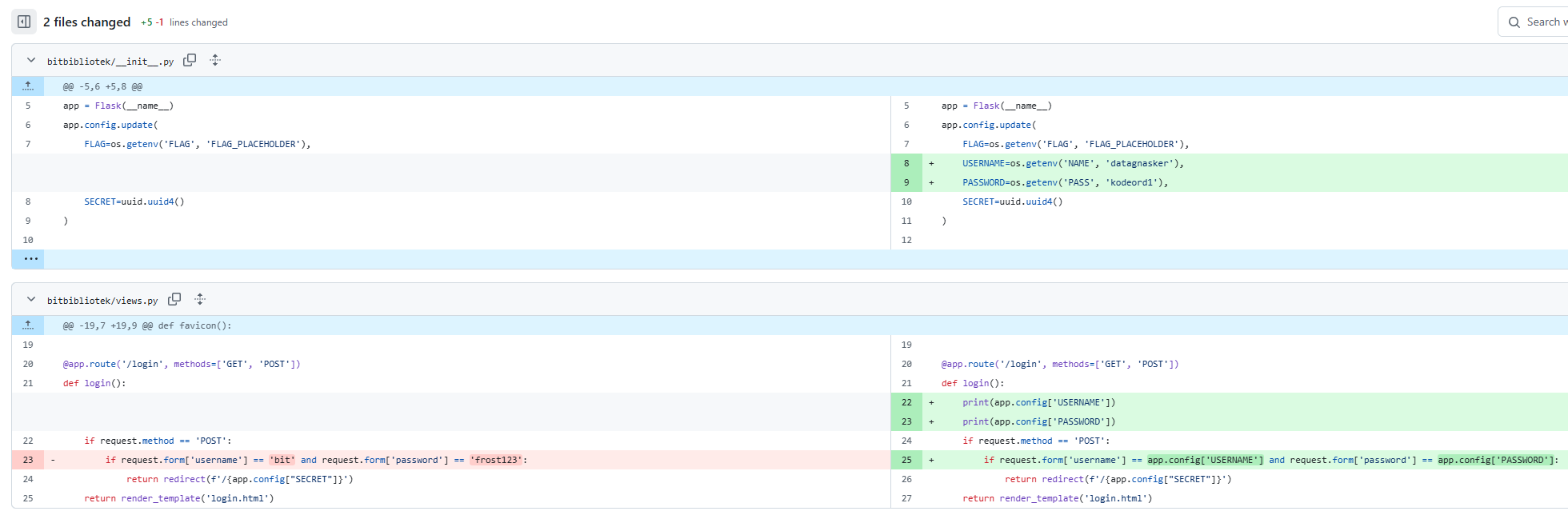
The commit revealed login credentials. I tested these on the live login page:
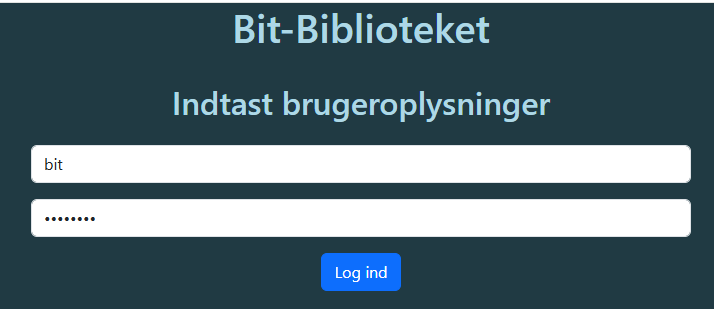
Success! Logging in revealed the flag:
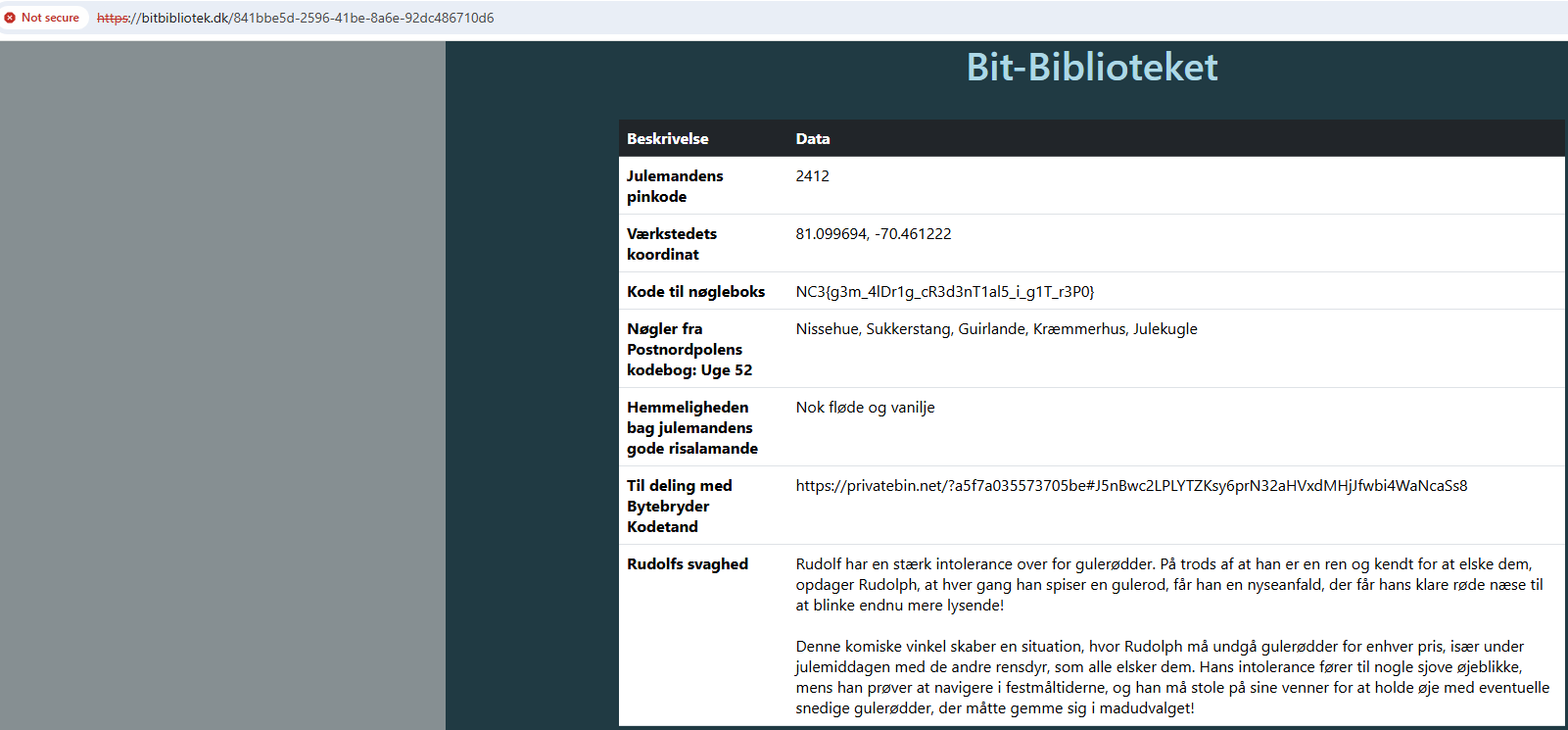
Flag
NC3{g3m_4lDr1g_cR3d3nT1al5_i_g1T_r3P0}
Reflections and Learnings
This challenge reinforced several key lessons about OSINT techniques and disciplined problem-solving:
Systematic Investigation: Brute-force attempts can be tempting, but following leads methodically often yields quicker and more reliable results.
Using GitHub search and commit history analysis provided clear, actionable paths.
Importance of Git Hygiene: Exposed credentials in a Git commit can lead to critical security breaches. Developers must ensure sensitive information is never committed to public repositories.
Leveraging Multiple Platforms: Combining information from GitHub, Stack Overflow, and Twitter emphasized the power of correlating data across platforms to uncover hidden insights.
Certificate Analysis: Extracting metadata, such as emails or organizational units, from certificates can provide valuable clues in OSINT-based challenges.
By approaching the task with patience and strategy, I successfully navigated through the clues to uncover the final flag. This challenge was an excellent reminder that effective OSINT relies on creativity, persistence, and attention to detail.